5 Best Practices for Data Hygiene in EHSQ Management (+ 1 Essential Tool)
Every day, hundreds of decisions are made on your plant floor. And most of them come down to one thing. Data.
It’s what powers your EHSQ strategy, helping you manage compliance, reduce risk, and maintain quality. It keeps people safe and your operations running smoothly.
But data is only as good as it is clean.
When your data’s off, mistakes start to slip through. You’re left dealing with workplace incidents, environmental breaches, or quality issues. And before you know it, you’re facing downtime, fines, or damage to your reputation.
The more data you collect, the more important it is to keep it clean.
But it doesn’t have to add more work to your already full plate. Your EHSQ software can help you stay on top of it with just a few good habits in place.
Here are a few simple ways to keep your data clean and ready to help you make smart decisions every day.
Why clean data matters
Let’s start with the basics—what do we mean by data hygiene?
Simply put, it’s the ongoing process of keeping the information you rely on every day up-to-date and error-free.
In manufacturing, that covers everything from incident reports and environmental monitoring data to quality checks and equipment maintenance records.
Without clean EHSQ data you can’t track, report, or act on safety, environmental, and quality issues with any confidence. But when you’re working clean you can:
- Make faster, smarter decisions based on facts, not assumptions
- Prove compliance in minutes with audit-ready data
- Spot risks early and take action before they escalate
- Keep processes running smoothly and avoid unnecessary rework
- Investigate incidents quickly and follow up thoroughly
Be ready when auditors come knocking
How EHSQ software helps keep data clean
Clean data doesn’t happen on its own. It’s a joint effort between your technology and your team.
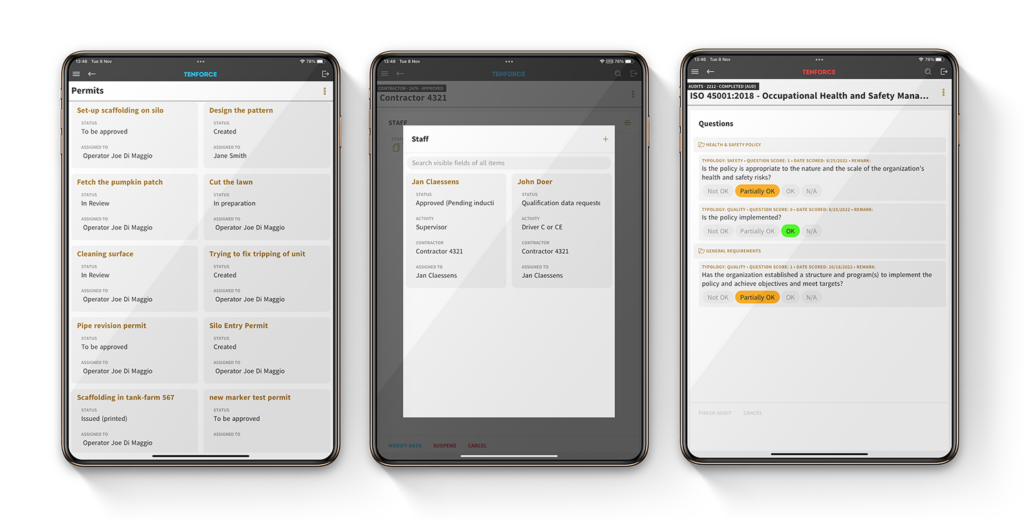
First up, the technology. Your EHSQ software does a lot of the heavy lifting. With built-in forms and checklists, it helps you capture accurate and consistent data from the start.
Next up, your team. Your software’s smart, but it’s only as good as the data it gets. When your team enters information carefully and keeps it up to date, your software can deliver insights you can rely on.
Integration matters too. When your EHSQ software connects with your other systems, everything stays aligned:
- Your ERP system feeds maintenance data, work orders, and equipment records straight into your safety processes to give one clear picture of what’s happening on site.
- Automatic updates from regulatory partners, like Enhesa, mean you’re always working with the latest rules and collecting the right data to prove compliance.
- And when you connect wearable tech, you get real-time insights straight from the floor.
There’s no more double entry, mismatched records, or missing info, just one trusted source of truth across your operations.
Every change, update, or correction is logged too, giving you a full audit trail you can rely on. And when it’s time to report, you’re not chasing missing numbers or second-guessing results—your data’s clear, your numbers add up, and you can stand behind every decision with confidence.
5 best practices for cleaner data
Like we said, software can do a lot, but it’s only as strong as the people using it.
Here are five simple ways to keep your data clean and ready to work for you.
#1. Start with an audit
Take a good look at the data you already have. Spot what’s missing, what’s inconsistent, or what’s out of date and fix it before it spreads.
Then, keep the momentum going. Encourage your team to flag issues as they see them, so improvements become part of the routine.
#2. Pay attention to the details
Clean data starts with how it’s entered. Show your team what “good data” looks like — clear formats, consistent units, complete fields.
But back it up with validation rules that catch common mistakes before they land in your system.
#3. Do a digital spring clean
Keep what’s useful, archive what you might need later, and let go of what’s no longer needed.
Then set clear retention rules so everyone knows how long to keep and when to let it go.
#4. Make it a habit
Data hygiene isn’t something you check off once a year. Schedule regular reviews to spot errors, merge duplicates, and make sure everything’s up to date.
Automate what you can, and use version control so you always know what changed, when, and by whom.
#5. Build a data team
Put a small group in charge of keeping data quality on track. They’ll set the standards, share best practices, and make sure security stays tight.
Preparing for a data-driven future
Data isn’t going anywhere. In fact, we’re relying on it more every day. That’s why keeping it clean matters now more than ever.
When data hygiene becomes part of your daily routine, clean, reliable data just becomes how you work. It supports every decision, every report, and every action you take to keep people safe and operations running smoothly.
If you’d like a hand getting there, we’re happy to help. Get in touch with us, and we’ll help make your data do even more for you — improving safety, quality, and sustainability across your sites.
Sign Up for email updates about our latest projects, articles and online events.