How American Steel Innovation Is Reshaping Safety
Gregg Walker has spent three years as the Senior Director of Communications at the Steel Manufacturers Association, and in that time, he’s become one of the most passionate advocates for an industry that, in his words, deserved more credit for how far it’s come. It’s his job to fight for that credit every day.
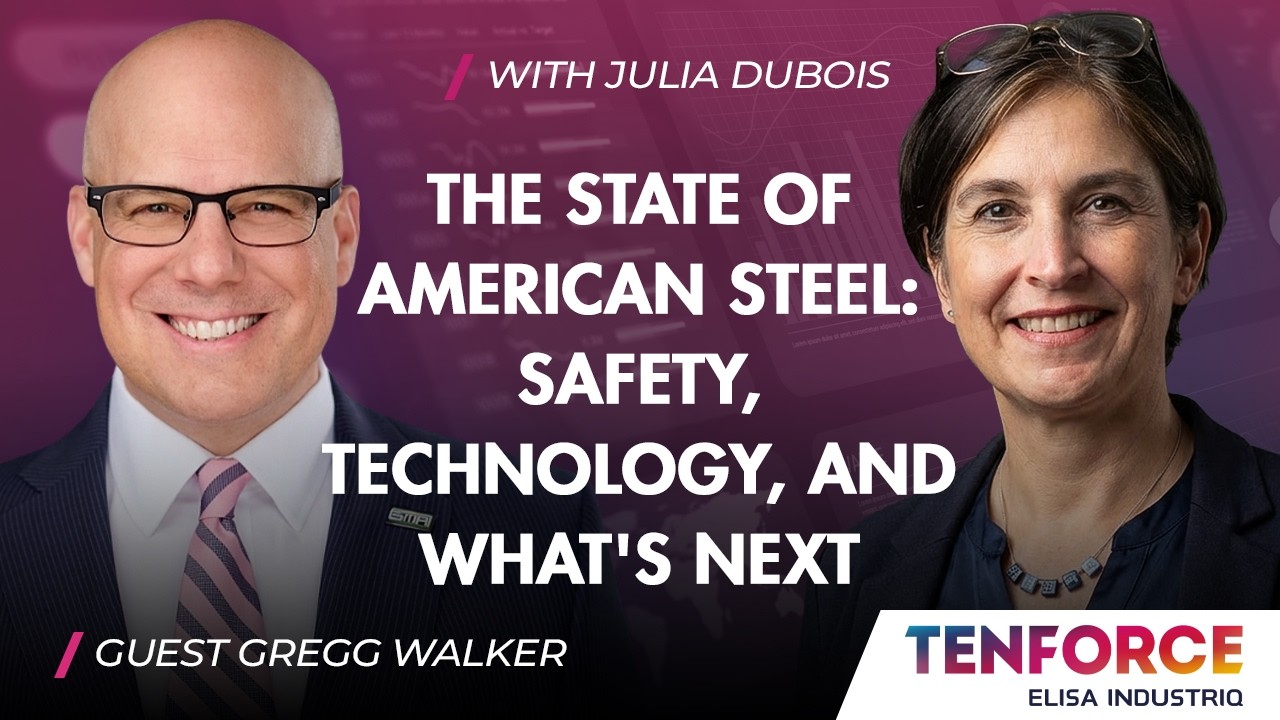
In the latest episode of The Pragmatic Safety Podcast, TenForce COO Julia Dubois sat down with Gregg to talk about American steel innovation and what the future holds for one of America’s most essential and iconic industries.
Watch or listen to the full episode >
All about American steel innovation
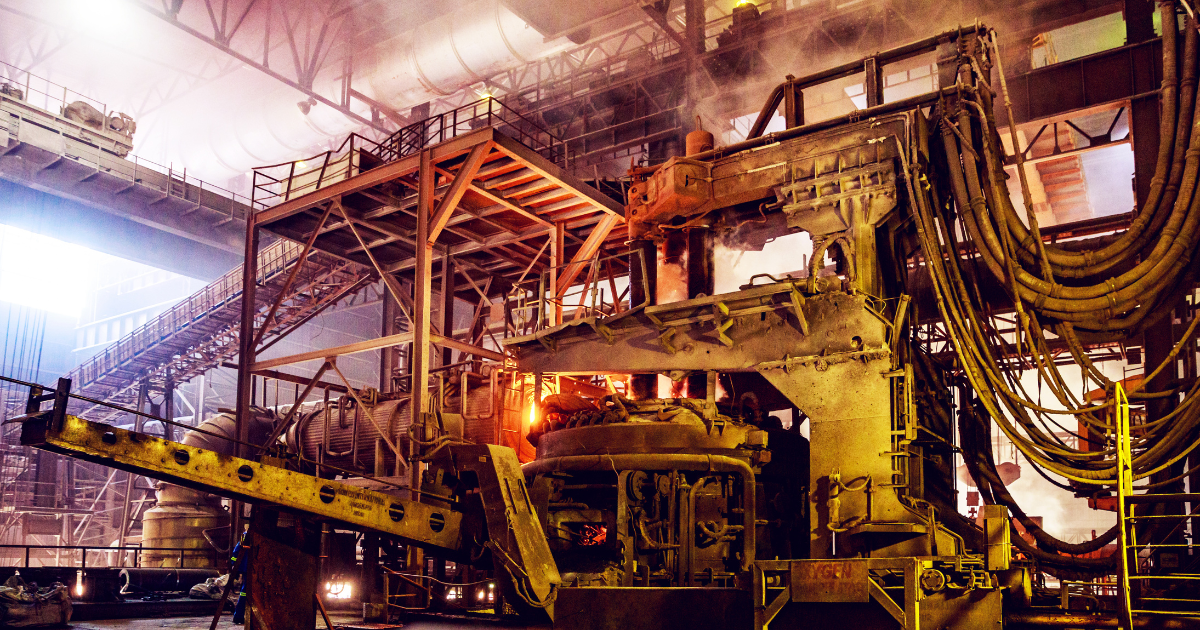
One of the biggest misconceptions about American steel is that it still relies on the same blast furnace technology that dominated the 20th century. In reality, American steelmakers have been innovating for decades, and today, the United States produces most of its steel using electric arc furnaces.
Electric arc furnace steelmaking works by melting scrap iron and steel and turning it into brand new steel. What makes it remarkable is that steel can be recycled endlessly without losing any quality.
As Gregg put it, “the great story about steel that too few people know is that it can be endlessly recycled. Steel that you make out of old steel is as good as the steel was before. There’s no degradation in quality.”
Steel from an old building or a retired locomotive can be melted down and turned into something completely new without degradation.
When the Steel Manufacturers Association was founded in 1988, electric arc furnace steel accounted for about half of American production. That’s grown all the way to 70%, and shows no sign of slowing down any time soon.
Holding sustainability to a higher standard
When it comes to sustainability, the steel industry is committed to staying with the times. The Steel Manufacturers Association helped create the Global Steel Climate Council in 2022, which developed the Steel Climate Standard, a certification that focuses exclusively on emissions and independently validates the claims of each company it certifies. Three SMA members have already achieved product certification under the standard, and even more are working toward it.
The ambitious goal of the standard is to give steel buyers a reliable way to compare the emissions profile of the steel they purchase and to ensure the entire industry is on the path toward the emissions targets set for 2050.
Keeping steel safer
As the name implies, our podcast is all about pragmatic safety, so it’s great that the steel industry has made the concept one of its priorities. In 2025, the SMA Safety Committee recognized seven steelmakers who operated 28 facilities with zero lost time injuries for the entire year.
One of the most distinctive aspects of the industry’s approach is the collaboration between member companies. The SMA Safety Committee meets twice a year in person, as well as holding online sessions where safety professionals share ideas and lessons from across the industry. As Gregg explained, “our members don’t compete on safety. Instead, they collaborate on safety.”
Gregg shared a story with Julia to give an example of how far safety in the steel industry has come. During a committee tour of a sugar refinery in New Orleans, a steelmaker noticed that the employees were using long-range handheld scanners that allowed them to track equipment from a much safer distance. He brought the refinery’s idea back to his mill and quickly adopted it. His workers were able to perform their job just as well while standing farther away from the dangerous equipment that defines a steel mill environment.
In Gregg’s words, “everything at a steel mill is heavy, sharp, and hot. The farther you can keep people away from stuff that’s heavy, sharp and hot, the safer you can keep them.”
The trouble with talent
When Julia asked Gregg what keeps him up at night, his answer highlighted an undeniable shortcoming of his industry. As echoed by steel executives from around the world, the biggest obstacle in steel manufacturing right now is recruiting and retaining skilled workers. Young people have been pushed towards white-collar careers, and now there’s a gap in the manufacturing workforce, even as steel mills have become safer and better paying than ever.
At a modern steel mill run by an SMA member, a worker’s much more likely to be at a computer in a climate-controlled environment than anywhere near the furnace.
As Gregg described it, workers are “less a strong back and more a sharp mind.” The industry needs to prove that point to the next generation.
Staying ahead in the age of AI
Every industry is reckoning with the rise of artificial intelligence, and steel manufacturers are no exception.
Steelmakers were among the earliest adopters of AI, especially when it comes to safety. They’ve used it, for instance, to automate processes that keep workers away from dangerous situations and identify safety risks before incidents happen.
Gregg noted that “AI can help them identify safety risks they didn’t even see, and they can help them find those risks before there’s an incident, before somebody gets hurt.”
The next frontier involves agentic AI to support higher-level decision-making. Gregg candidly admitted that his industry isn’t quite ready for that change, but also acknowledged that nobody ever feels totally ready for any new technology. What steel mills are doing is collecting more data than ever and learning how AI can help them use it better.
How steel and safety connect
The successes of the steel industry have proven what’s possible when an industry gets safety and technology right at the same time.
At TenForce, we work with industrial teams across chemical, oil and gas, and manufacturing to help them manage safety processes in one connected system. The challenges steelmakers are navigating, like integrating new technologies, are the same challenges our team sees across every high-risk industry, and The Pragmatic Safety Podcast exists to bring all of those conversations into the open.
Subscribe so you don’t miss our next episode, and visit tenforce.com to explore how we help industrial teams develop more connected operations.
Let’s make safety pragmatic. Starting now.
Watch or listen to the full episode now: