
A Stronger Line from Incident to Action: What’s New in TenForce Incident Management
Reporting an incident or near miss is an important first step. It’s what comes next that counts, because only by understanding what happened can you prevent the same event from occurring again.
You need to understand how serious the risk was. You need to see whether similar events are happening in the same area. And you need to investigate properly, assign ownership, follow actions through and make sure critical fixes are complete before work continues as normal.
But this is where incident processes often start to break down. Investigations aren’t properly owned, actions are closed too quickly, and important near misses disappear into long reports that nobody revisits.
These latest updates in TenForce Incident Management are designed to strengthen that full follow-up process, from the first assessment through to verified corrective action.
Here’s what’s new.
TL;DR: What’s new at a glance
Here’s a quick overview of what’s new in the Incident Management module:
- Initial risk assessment for incidents and near misses – assess severity and probability to better understand the actual or potential risk behind an event.
- Residual risk assessment – evaluate whether planned mitigation and follow-up actions are expected to reduce severity, probability and exposure.
- Site Layout for Incidents – mark incidents on a custom site map and view incident patterns in their physical site context.
- Five Whys Analysis – guide investigators through a structured chain of “why” questions to identify underlying causes.
- Cause & Effect Analysis – explore more complex incidents using a Fishbone-style analysis of probable causes and contributing factors.
- Combined RCA methods – use Five Whys and Cause & Effect Analysis together when an investigation needs more than one approach.
- Root causes as separate items – turn identified root causes into linked items with ownership, categorization, evidence and action planning.
- Dual closure responsibility for incident actions – add a review step before high and critical priority actions are closed, while keeping lower-priority follow-up flexible.
Read on to find out more…
Spot the near misses that could have become serious incidents
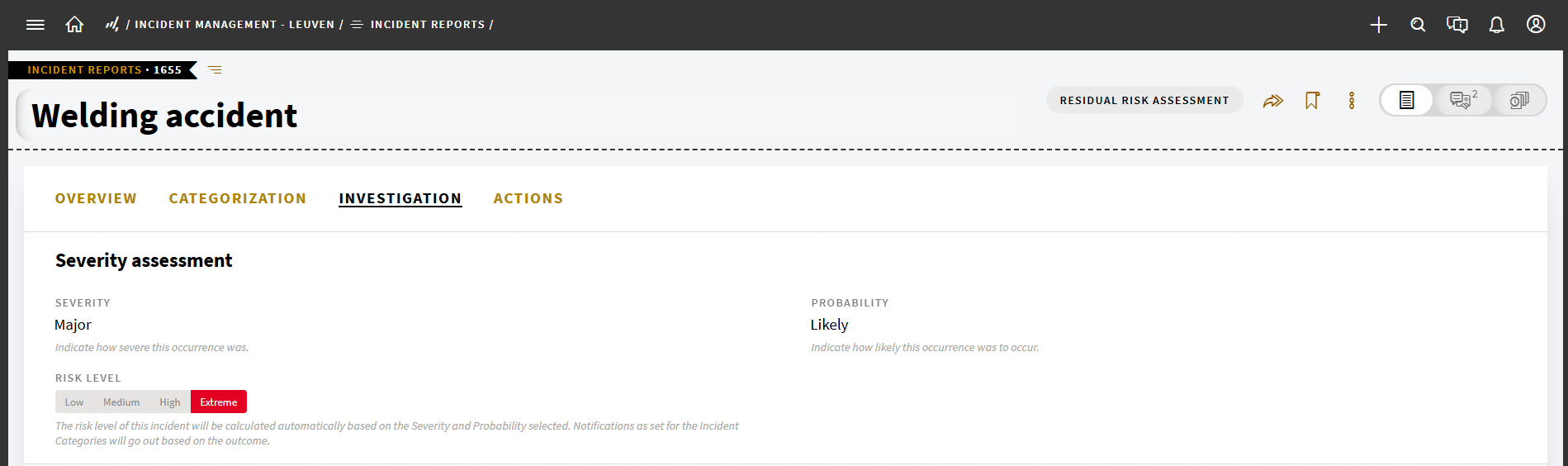
Not every serious risk ends in a serious injury. For instance, a maintenance task might bypass isolation controls without causing an immediate incident or a forklift near miss may end without damage but still expose a weak point in traffic separation on site.
On paper, those events can look minor. On site, you know they were not.
That’s where initial risk assessment helps. In TenForce, you can now assess incidents and near misses based on severity and probability, giving you a clearer view of the risk behind the event, not just the outcome this time. This helps you separate lower-risk events from the warning signs that need a stronger response.
It means high-potential near misses are less likely to get lost, serious risks are easier to recognize and escalate, and teams have a more consistent way to explain why one event needs urgent follow-up while another can take a lighter route.
The update also adds residual risk assessment, so you can evaluate the expected effect of your action plan. Once mitigation measures are defined, investigators can assess whether the same event would now be less likely, less severe, or expose fewer people to the underlying hazard.
Once you understand the level of risk behind an event, the next question is usually: where is this happening?
See where incidents keep happening on site
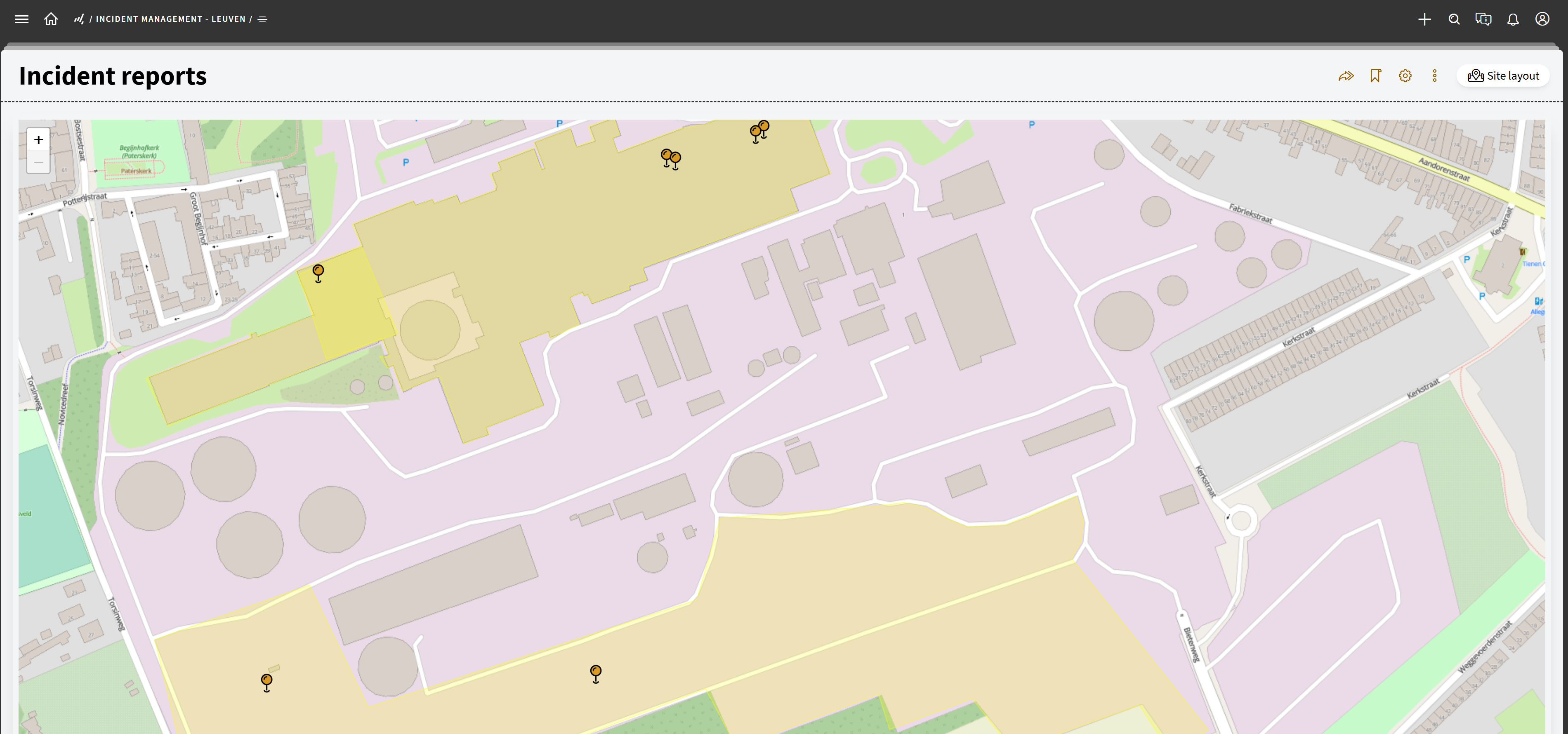
When similar events keep happening near the same production line, loading bay, warehouse aisle or maintenance workshop, that usually tells you something important. Maybe forklift and pedestrian traffic are crossing too often. Maybe contractors are working in a congested area during shutdowns. Maybe visibility is poor around a blind corner. Maybe controls look good on paper but are not holding up during day-to-day operations.
With the Site Layout add-on for Incident Management, you can now mark incidents directly on a custom site map. Instead of reviewing incidents only through lists and reports, you get a more visual way to understand where events are occurring and where patterns may be developing.
This way the location becomes more than just a field in a form. It becomes a real operational area where people, vehicles, equipment, materials and work activities come together. And that makes it easier to spot recurring issues, support safety meetings with clearer context and show operational leadership where additional attention may be needed.
Once you can see the pattern, the next step is understanding why it keeps happening.
Use the investigation method that fits the incident
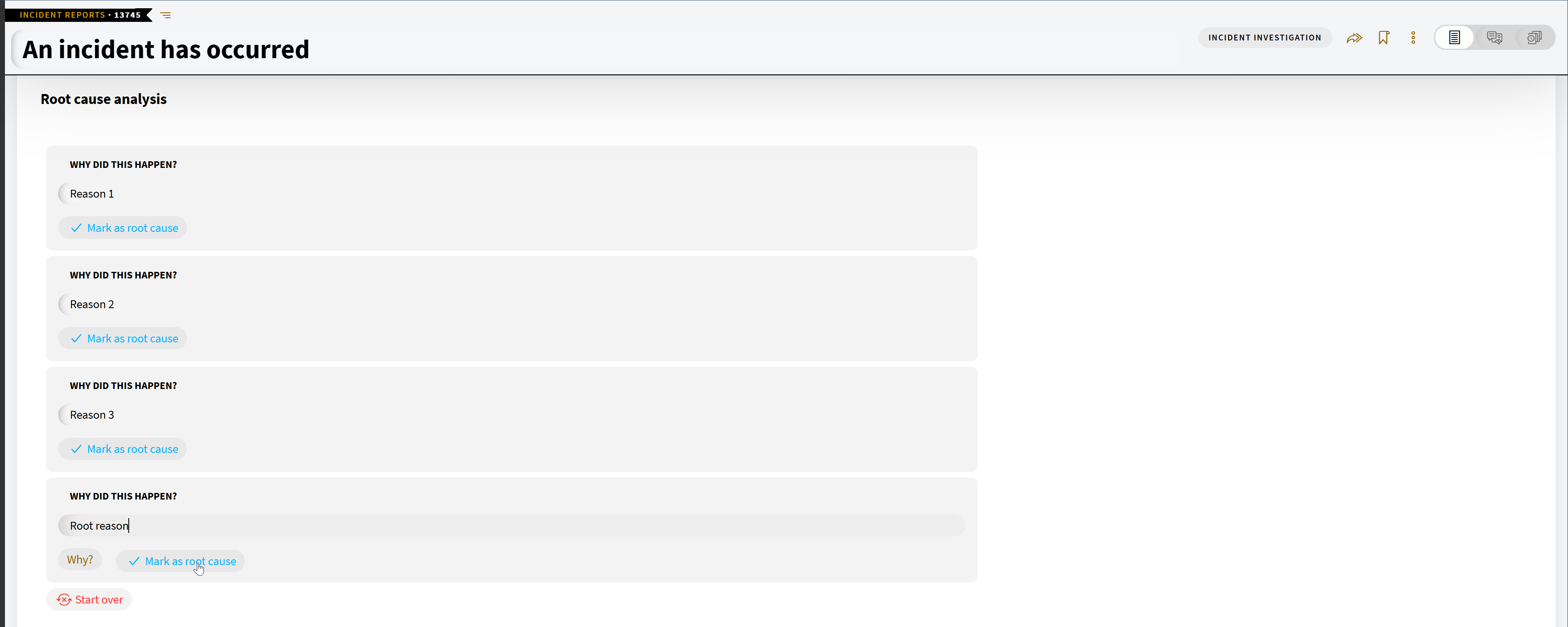
Not every investigation needs a full formal root cause workshop. Sometimes the issue is as straightforward as an unclear procedure or a control that was skipped. Other incidents are more layered, and equipment condition, planning, contractor coordination, communication and work environment may all play a part.
That is why our Root Cause Analysis add-ons give you more flexibility to investigate in the way that fits the event.
With Five Whys Analysis, you can move step by step through a clear line of questioning until you reach the underlying cause. It’s a practical option for more focused investigations where you want to keep the reasoning easy to follow.
With Cause & Effect Analysis, also known as Fishbone or Ishikawa, you can unpack more complex incidents in greater detail. Probable causes and contributing factors are grouped into clear categories, helping you build a fuller picture of what may have led to the event.
And when one method is not enough, you can combine them. You might start with a Cause & Effect Analysis to map out possible contributing factors across maintenance, procedures, supervision and work planning, then use Five Whys to dig deeper into one specific issue. Or you can begin with Five Whys and move into a broader analysis if the investigation opens up.
Of course, an investigation only matters if the findings lead to visible follow-up.
Make sure investigation findings turn into real follow-up
Once you know what contributed to an incident, you need to decide what happens next. Who owns the follow-up? What evidence supports the conclusion? Which actions are needed? And how do you keep that work visible once the investigation is complete?
That is why root causes can now be managed as separate linked items in TenForce Incident Management.
Instead of sitting only in the investigation report, each identified root cause becomes a structured part of the follow-up process. It stays connected to the incident, while carrying its own owner, priority, evidence, status and action plan.
That means you can clearly see:
- Which root causes were identified
- Which actions were linked to them
- Who owns the follow-up
- What evidence supports the conclusion
- How the work is progressing
…without having to dig back through investigation reports or meeting notes.
This is especially useful after more serious incidents, investigations with several contributing causes or reviews where leadership wants a clear line between findings and corrective action. It also helps create more consistency across sites, because root causes are documented and followed up in the same structured way.
Add another set of eyes before critical actions are signed off
When an action is marked as complete, you want to be confident that the right work has been done. For smaller follow-up tasks, a simple closure flow often makes sense. But after a serious incident or high-potential near miss, you may want another person to confirm the corrective action is actually good enough before the issue is considered closed.
That is what dual closure responsibility supports.
Incident actions can now be reviewed before closure. By default, the reviewer is the person who created the action, but the reviewer can be changed where needed.
When an action is submitted for review, it moves to a new status: Ready for Review.
- Low and medium priority actions can be closed directly, or sent for review when an extra check is useful.
- High and critical priority actions must be reviewed before they can be closed.
This gives you an extra quality check for the actions that matter most, while keeping lower-priority follow-up practical and lightweight.
A stronger line from incident to action
A good incident process helps you do something useful with what was reported. And that’s what these updates are here to do.
You can spot serious near misses before they are brushed off as “nothing happened.” You can see when the same issue keeps showing up in one area. You can investigate in a way that fits the event. You can turn root causes into clear actions with real owners. And you can add an extra check before important actions are closed.
That makes it easier to learn from what happened and act before the same problem comes back.
Watch the on-demand session to see these updates in action and learn how to build a stronger line from incident to action.